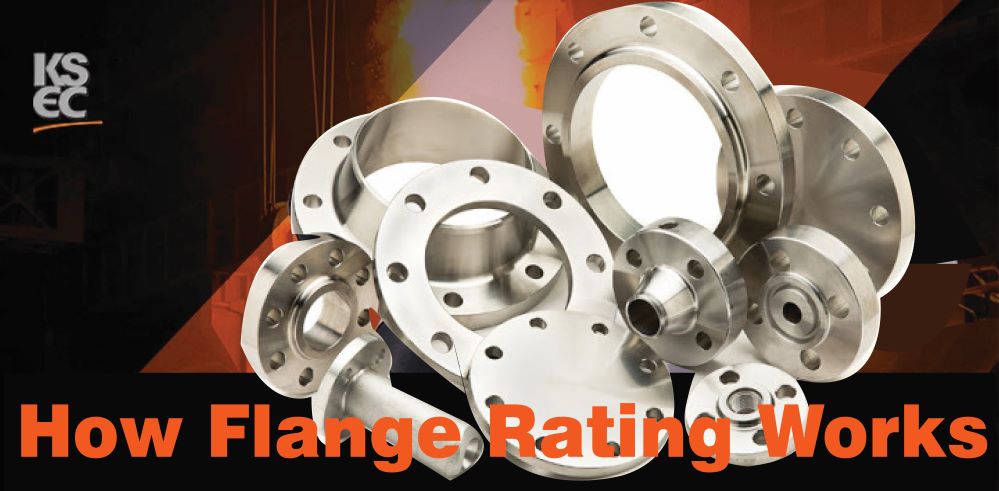
It is very common that people who are new in the piping industry struggle with how flange rating works. Before going into the explanation of the same, let us first know what a flange is and what role does it play in the piping industry.
What is a flange and where it is used?
A flange is a device that is used to connect pipes, pumps, valves, and much other such equipment to form a piping system. The flange plays a vital role in the piping system as it eases access to cleaning, inspection, or modification. These flanges are manufactured in various types, such as Weld Neck Flange, Slip-on Flange, Socket weld flanges, Lap joint flange, Threaded flange, Blind flange, Orifice flanges, Reducing flanges, and many more.
How does the flange rating work?
It is important to check if the flanges used in the oil, gas, and petrochemical industries can withstand the pressures and temperatures to which they are subjected. Not only is the size of the flanges, but the rating equally important. Hence, choosing a flange with the correct rating ensures that it can withstand the pressure of working at various temperatures.
Flange rating is defined as its class which refers to the maximum pressure that a flange can withstand at high or increasing temperatures. Naturally, with a higher flange rating or flange class, flanges are said to be stronger because they can take more pressure at increasing temperatures.
The recognized industry standard of the flanges is ASME B16.5 which covers standards applicable to flanged fittings and pipe flanges. This includes the flanges ranging from sizes NPS ½” through to 24” diameters.
So, as the temperature increases, the maximum permitted pressure decreases. The concept of flange rating can be clearly explained with the following example.
As a Class 300 flange is made with more metal and can withstand more pressure, a Class 300 flange can bear more pressure than a Class 150 flange. There are however a variety of variables that can affect a flange’s pressure capability.
This is how the flange rating works in the piping system. We hope this blog was helpful to you for understanding the same.